

Selling building materials by the pallet, the bag and the tonne from one stock
A building-materials yard sells cement by the pallet and by the bag. One stock in one base unit stays right when selling by pallet, bag and tonne.
A contractor orders cement by the pallet. A mason walks in and takes three bags. Sand goes out by the tonne, bricks by the pallet or by the hundred, tiles by the square metre. A building-materials yard sells the same product in several ways on the same day. If selling by pallet, bag and tonne is tracked as separate counts, the stock is never right. The pallet count says one thing, the bag count another, and the yard learns the truth only at the stock count.
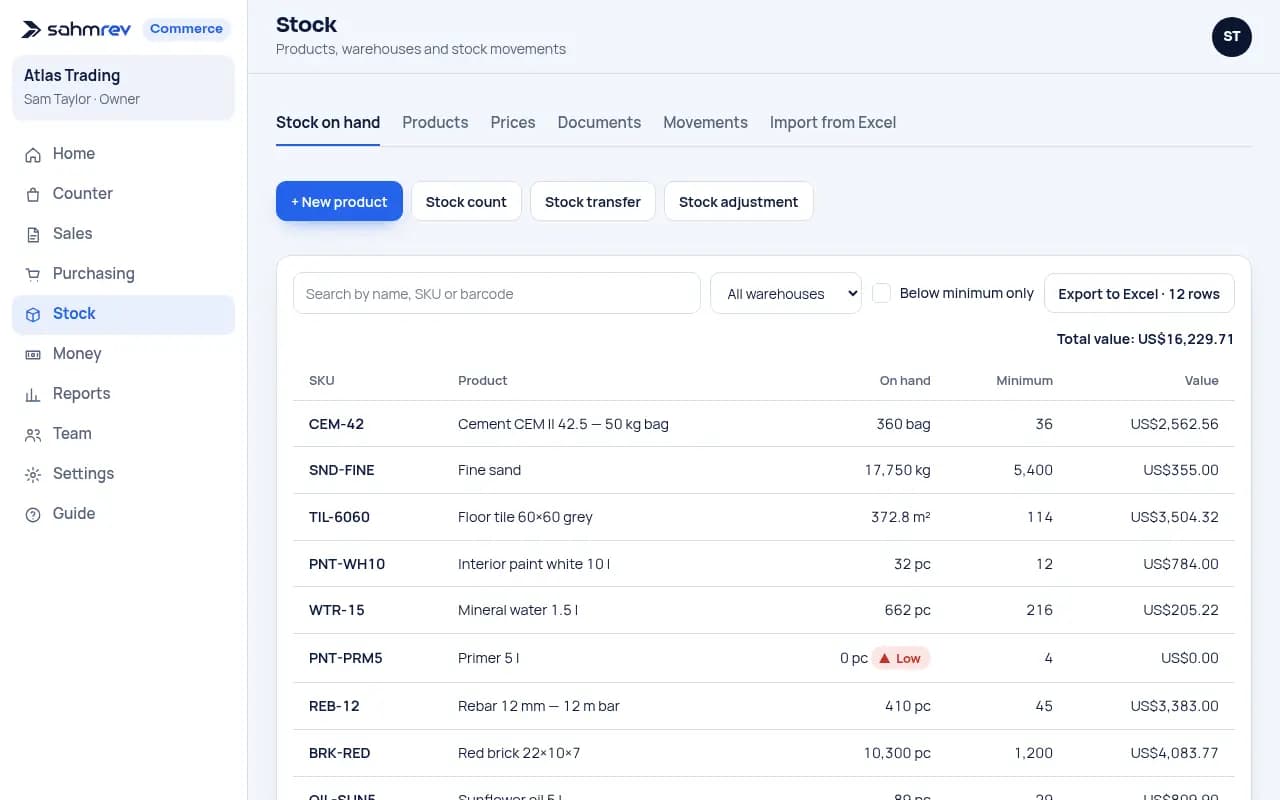
Keep one stock per product, counted in a single base unit, with the other units defined as packs of it. Cement is counted in bags of 50 kg, and a pallet is 40 bags. Bricks are counted one by one, and a pallet holds 200. Sand is counted in tonnes, and rebar by the 12 m bar. Once these are set, every document can use the unit the customer thinks in, and the stock moves in the base unit underneath.
One morning, a contractor’s order goes out with two pallets of cement and five extra bags. The delivery note says two pallets and five bags, the way the contractor ordered. The stock of cement goes down by 85 bags, because two pallets are 80 bags. An hour later a mason buys three bags at the counter, and the same stock goes down by three more. Nobody converts anything by hand, and the count at the end of the month matches.
Errors start at three moments
Most errors in this trade start at one of these moments, and each has a simple fix. The first is the reservation. A confirmed order for a large site holds stock in the yard. If nothing marks that stock as taken, the counter sells the same bags to someone else. When the order reserves what it needs, the counter can sell only the stock that is free.
The second is the partial delivery. A site rarely takes everything at once: two pallets today, the rest when the next slab is poured. Each delivery note takes what leaves the yard that day from the same order, and the order keeps what is still to deliver. The invoice can then come from one delivery or from several, at the end of the week or the month, so nothing is invoiced twice and nothing is forgotten.
The third is the return. Unused bags come back from the site, and sometimes a pallet that was never opened. A return is recorded as a credit note that puts the goods back in stock in the same base unit, so the bag count stays right and the contractor’s account shows the credit at once.
From the quote to the payment
The document carries what the yard needs to deliver. The quote, the order, the delivery note and the invoice all carry the name of the building site, so the contractor can see which site each delivery went to. The delivery note also shows the vehicle and the driver. The quote states the terms the trade uses: how long the prices hold, that delivery to site is by appointment, that unloading is by the customer, and that the goods stay the yard’s property until they are paid.
Prices in this trade move with cement and steel. The yard moves a whole category by a percentage in one step, rounds the result, and saves once. The new price sheet goes to customers in PDF or Excel. Contractors with an agreed discount keep it through their own price list, so the change in the base price reaches them correctly.
Two warehouses are common: the shop and the yard. Stock is counted in each, and a transfer moves pallets from the yard to the shop when the shelves run low. Products under their minimum appear on the reorder list, grouped into one draft order per supplier.
Money comes in the ways the trade pays: cash, transfer, cheque or bill of exchange, each set against an invoice. Credit limits count the cheques that have not cleared yet, and the receivables by age show which contractor is late.
One stock from counter to count
At the counter, the same product answers to more than one barcode. The bag’s barcode sells one bag, and the pallet’s barcode sells a whole pallet, both from the same stock. A cashier who scans the pallet label does not have to remember that a pallet is 40 bags.
Cash at the counter and credit on account live side by side in a yard. A mason pays cash for three bags and leaves with a ticket. A contractor takes ten pallets on account and pays at the end of the month. Both come out of the same stock. Before the next order leaves, the yard sees for each contractor what is owed, since when, and which cheques have not cleared yet.
A stock count is still worth doing, and it now confirms what the yard expects. The yard counts each warehouse in the base unit, sees the difference product by product, and posts it once. Count the products that move fast more often and the slow ones twice a year, and the work stays small.
sahmrev Commerce works this way for building-materials yards. The building materials page shows the stock by warehouse and a delivery to site, the Commerce page lists what the product includes, and the live demo is a building-materials trader you can open and change.
Common questions
- Can I sell the same product by the pallet and by the bag?
- Yes. The stock is counted in one base unit, the bag, and a pallet is set as 40 bags. Each document uses the unit the customer asks for.
- What if a site takes its order in several deliveries?
- Each delivery note takes what leaves that day, and the order keeps what is still to deliver. The invoice can come from one delivery or from several.
- How are returns from a site recorded?
- As a credit note that puts the goods back in stock and credits the customer’s account.
- Can contractors keep their own prices?
- Yes. A contractor’s price list holds the agreed discount, so when the base price moves, their price follows it.