

The e-invoice for a distributor on the road
What van sales software and the e-invoice in Morocco change for a van seller with dozens of invoices a day and often no signal, and what to prepare now.
A distributor’s invoice is made on a phone at a shop counter. The driver who makes it has eight more stops before noon. Morocco is now asking its companies, step by step, to make their invoices electronic. A distributor looking at van sales software and the e-invoice in Morocco wants to know whether the van keeps working as it does today and what has to change on the road. The calendar and the technical rules belong to the tax administration, so the dates that apply to you are a question for its notices or your accountant.
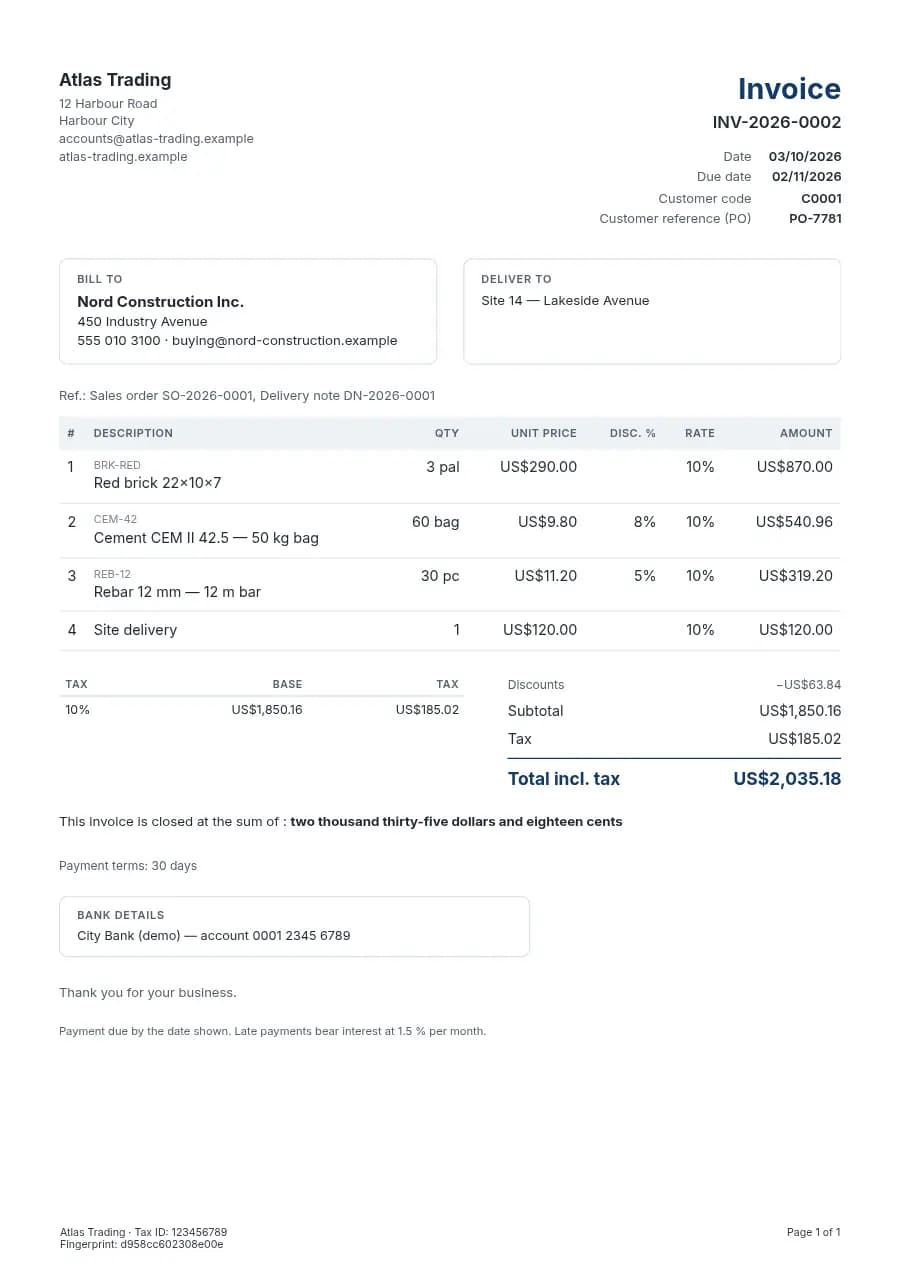
The invoice itself stays the same. A sale at a stop is a real invoice of the company, in the company’s own numbering series, with the same taxes, the same legal mentions and the same rules as an invoice made at the office. Nobody retypes it later from a separate van receipt. That matters for the e-invoice, because the tax platform reads a structured file built from the invoice. An invoice retyped twice can differ twice.
Each outlet’s card holds the customer details
An e-invoice to a business also carries the buyer’s identifiers, in Morocco the ICE of 15 digits. On a round of eighty shops, that is eighty ICE numbers to have on file, written correctly. At the stop, the shop owner is busy and the van is blocking the street. The best time to collect them is at the office, before the round, on each outlet’s card.
Gaps appear with new outlets. A driver who finds a new shop on the road adds it from the phone with its name, its phone number, a photo and the position where the van stands. That is enough to sell and to find the shop again next week. An e-invoice needs more. The office should complete the card with the legal details before the shop’s first invoice on credit, or decide with its accountant how those first sales are invoiced. Make it a rule that a new shop buys for cash until its card is complete.
Offline sales still reach the day close
Many stops are in basements, markets and villages where the network comes and goes. On a van that works offline, an invoice made without signal is saved on the phone with the time and the place of the sale, and it waits there. When the signal returns, the waiting items are sent in the order they were made, and a sale sent twice counts once. The phone does not make the structured file or the archive copy. Both are made from the invoice once it has reached the company’s records.
Returns follow the same path. A shop gives back a damaged crate or an expired product. The driver records the return with a reason and a photo, and it becomes a credit note that refers to the invoice it corrects. For the tax platform a credit note is a document of its own too, so a return on the road should never be settled by discreetly changing the next invoice.
Cash and credit leave the invoice as it is. They change what the office checks at night. The day close counts the van’s stock and the driver’s cash against the day’s sales and collections. Invoices on credit stay open on the customer’s account until they are paid. When every sale was a real invoice from the start, the day close and the e-invoice agree.
The office fixes refusals and prepares now
In a clearance model, the tax platform can refuse an invoice and send it back with a message. On the road, a driver cannot fix a missing identifier from a shop counter. The office handles the refusal. It reads the platform’s message on the invoice, corrects what is wrong and sends it again. That is one more reason to complete outlet cards before the round.
The e-invoice for a distributor can be prepared now, whatever the date. Complete the legal details of every business customer on the round, starting with the ones that buy on credit. Check that your own identifiers are written the same way on every document. Ask your accountant which customers count as businesses for the e-invoice, and keep that on their cards. Make sure every product carries the right tax rate, because a van sells fast and nobody corrects a rate at the stop. Use one numbering series for invoices and another for credit notes, wherever they are made.
In sahmrev, the van sells inside the same system as the stock, the money and the invoices, so a stop sale is an invoice of the company from the first moment. E-invoicing is an option for each company: invoices are produced as structured files in the UBL 2.1 format with an archive copy, and the connection to the Moroccan tax platform is built and waits for its access to open. sahmrev Distribution is an early version: it works today, but it is not open to new clients yet.
The Distribution page describes the van, the round and the day close, and invites you to tell us about your rounds. The food wholesale page shows how lots and expiry dates follow the goods, which matters as soon as a van carries food, and every one of those lots ends up on an invoice.
Common questions
- Is a sale made on the van a real invoice?
- Yes. It is an invoice of the company, in its own numbering series, with the same taxes and legal mentions as an invoice made at the office.
- What happens to an invoice made without signal?
- It is saved on the phone with its time and place and sent in order when the signal returns. The structured file is made once the invoice has reached the company’s records.
- What should we collect before the round?
- The legal identifiers of every business customer, in Morocco the ICE of 15 digits, on each outlet’s card, starting with the shops that buy on credit.
- Can a company use sahmrev Distribution today?
- Distribution is an early version. It works today, but it is not open to new clients yet. Tell us about your rounds and we come back to you.