

Take the wood joinery off paper.
Replace paper and Excel in wood joinery and, if your shop still runs on paper or spreadsheets, stop listing cabinet parts by hand and pricing them in a spreadsheet. A cabinet template turns its sizes into parts, edge banding in metres and a price.
What paper costs you each month
- Cabinet parts are listed by hand from the drawing, and a forgotten side or shelf shows up only at assembly.
- Edge banding is counted roughly, so a job runs out halfway or the shelf fills with rolls nobody needs.
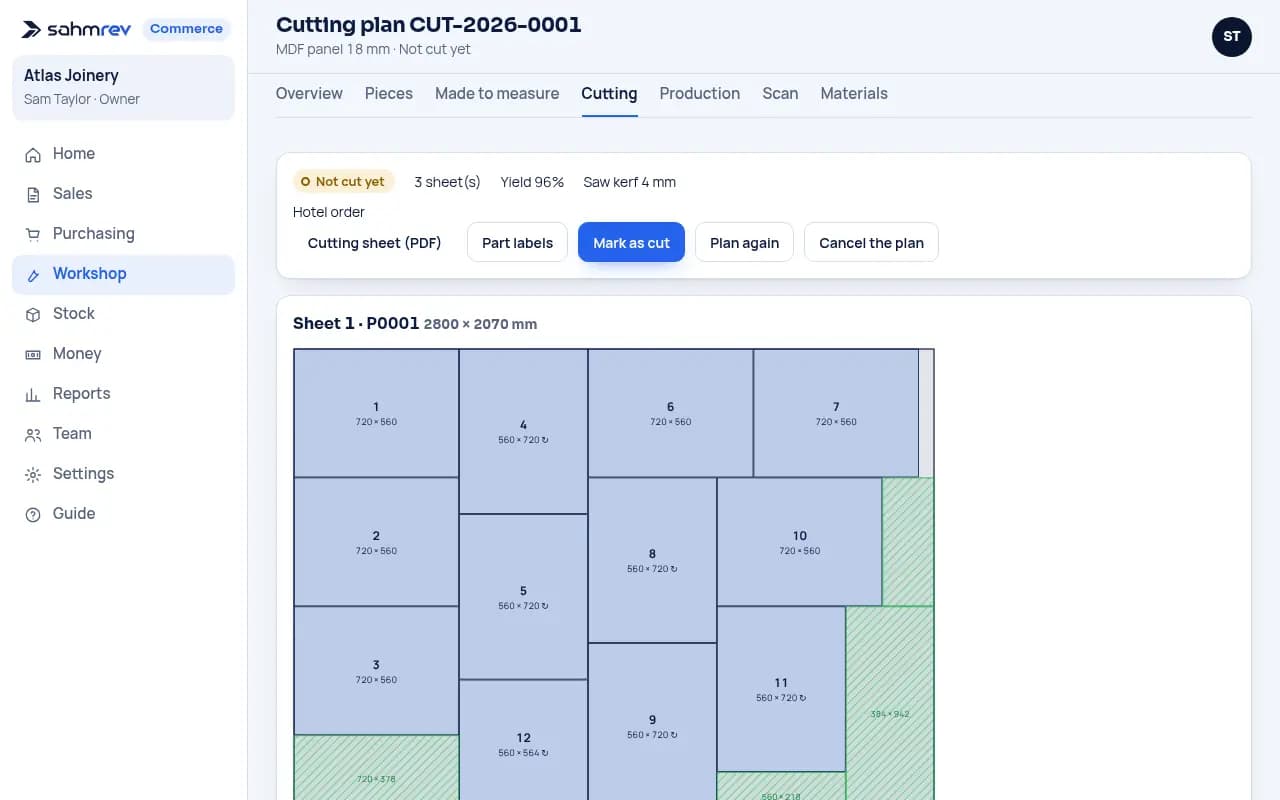
- Panels are cut one cabinet at a time and offcuts are stacked without a size, so new panels get opened instead.
- When parts are turned to fit, plywood and oak lose their grain, and a door no longer matches the one beside it.
- Finishing is paid by the piece and counted on paper at the end of the month, which brings questions about who did what.
Describe each cabinet once
- A cabinet template turns the width, height, depth, shelves and board into its parts, its edge banding in metres, its hinges, its labour and its price.
- Panels, offcuts and oak boards are numbered pieces with their size, and oak is counted by the cubic metre.
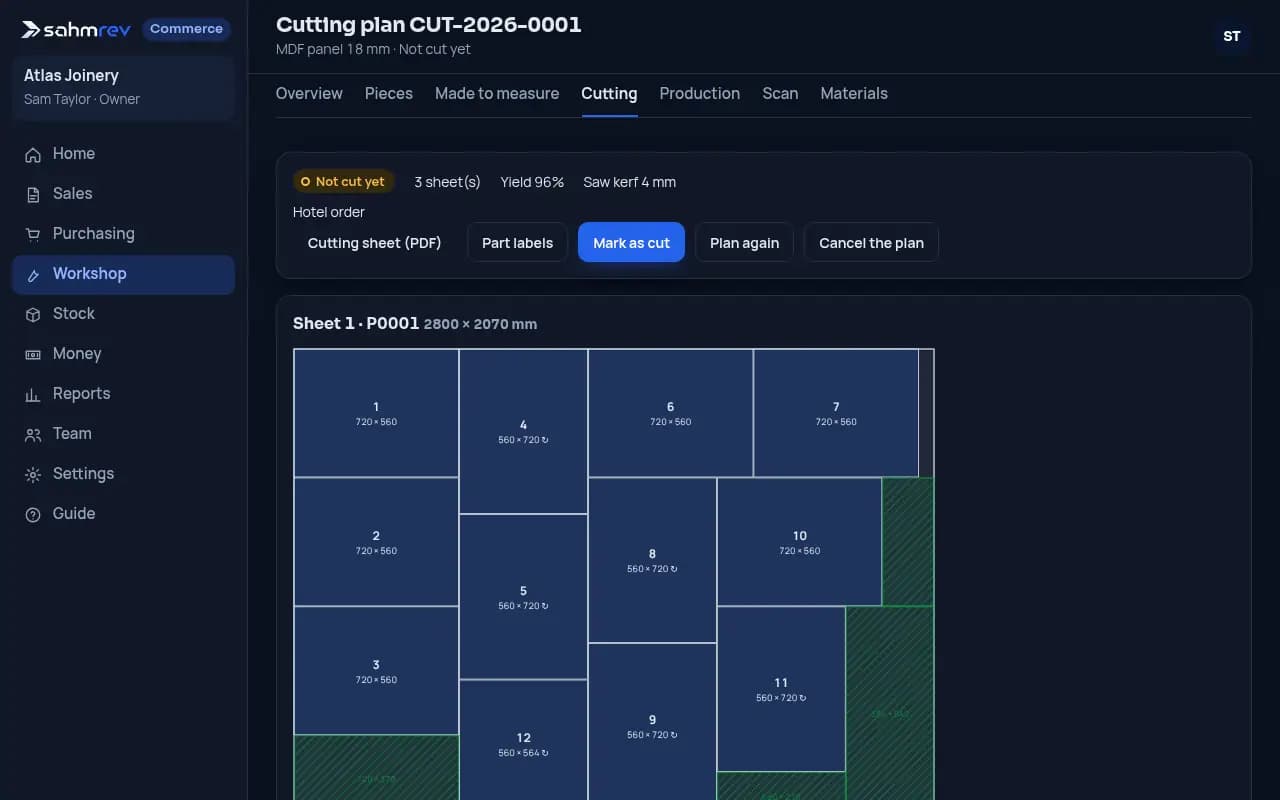
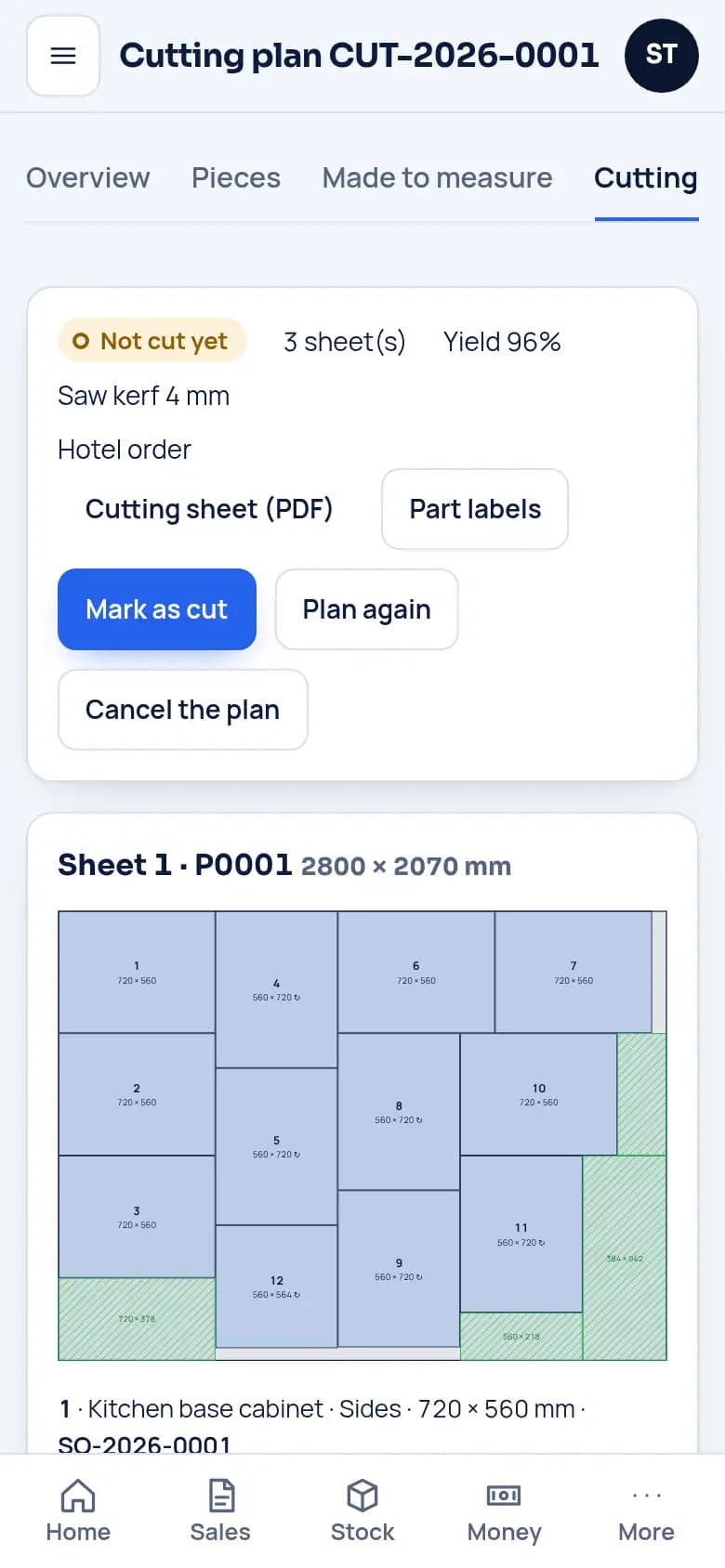
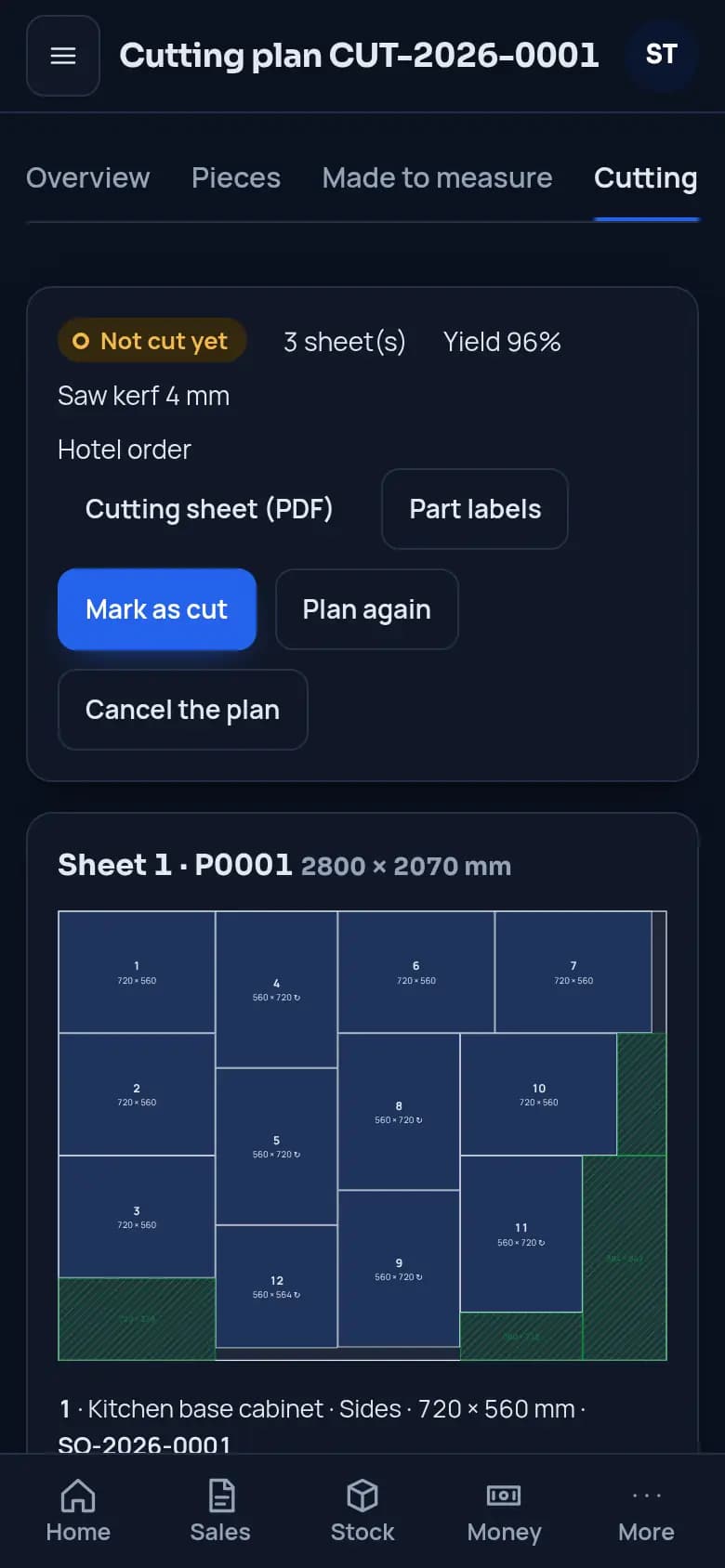
- Cutting plans use offcuts first, count the saw kerf, let MDF parts turn and keep the grain of plywood and oak.
- Each step, from panel cutting and edge banding to drilling, assembly and finishing, is closed on the phone of the person doing it.
- The finisher’s pieces go into the monthly pay. The delivery note and the invoice come from the same order.
How you move off paper
Send your lists
Your materials, your panels or sheets in stock, your customers and your price list come in from Excel.
Get a workspace for your trade
The workspace starts with the products, units, documents and rules of your trade.
Train the team
The first session is with the people who quote, cut and deliver.
Start with one order
The next order goes through the software from the quote to the invoice.
Let the template list the parts.
Open the live demo, a stone workshop where an order goes from its sizes to its parts and the cutting plan, the same steps a cabinet takes. Or describe your workshop, and we reply with how your boards and price list would move in.